
Johnstone teenager Lucy Grant, who tragically passed away earlier this month, has been failed says mum
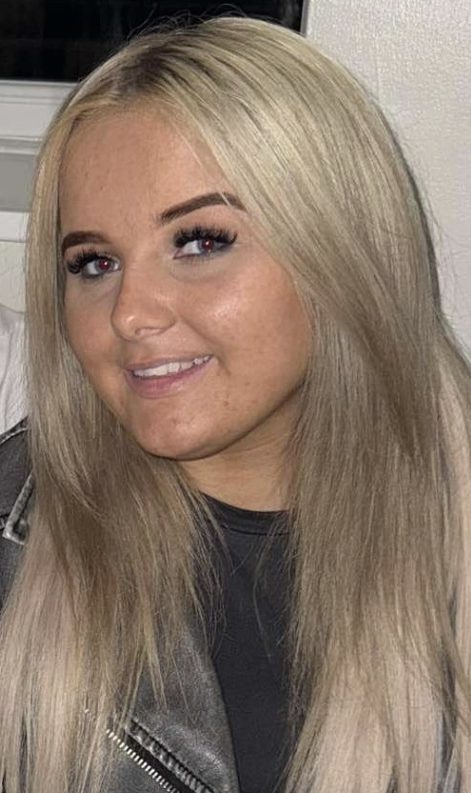
THE family of a girl who tragically died after suffering 60 epileptic seizures in under 12 months, has demanded NHS Scotland stop pushing children into adult services.
Lucy Grant, 17, was a quick-witted, sharp tongued, fourth year pupil at Johnstone High School, who had never been away from her mother when she was struck down with suspected Catamenial Epilepsy just four days after she turned 16.
She suffered tonic-clonic seizures every other day, but was still waiting for collaborative specialist care at the time of her death.
Shattered
Her shattered mum Lynette Anderson, 44, said: “The last year has been a constant battle with the NHS, fighting weekly to try and get Lucy the care she needed because her seizures were getting worse and more dangerous.”
The aspiring beautician celebrated her birthday on April 6, and she was due to be seen by specialist services at Queen Elizabeth Hospital (QUEH) in Glasgow on the April 24 but heartbreakingly passed away in her bedroom last Tuesday.

Mum-of-six, Lynette said she told her GP and emergency services her daughter was going to die if they didn’t help her, Lynette said being treated as an adult by QUEH delayed access to treatment.
She said: “The NHS should have treated her like a child, and she would have been seen straight away. A neurologist would have come to see her in hospital, but instead everything was done over the phone.
“The GP pleaded with them to treat her as a child, because apparently, she would have been seen within ten days. All that the neurologist kept on telling the GP to do was increase her medication.”
Distressed
“This all started when she was admitted to hospital the first time. I wasn’t allowed to stay at the time because it was an adult ward. She was so distressed overnight that they had to phone me to come back first thing in the morning. The doctor told me the children’s hospital refused to take her and that the acute medical receiving ward, where she was, was not the best place for her to stay, so she was sent home.”
Lucy was discharged with 500mg of medication prescribed to treat epilepsy. She did not receive epilepsy first aid training, and was advised to await outpatient follow up, but Lynette pushed the specialist team for more input, and secured her daughter a face-to-face appointment with a consultant in August 2024.
Lynette said: “We thought finally we would get somewhere, but that was only a 20-minute appointment and was more like a lecture in how to look after herself. Lucy was encouraged to exercise more, but she couldn’t she was so exhausted with the seizures. She really tried to get out walks, and push herself, but it was hard for her.”

At that appointment the medication was not changed but increased and by the time she died, Lucy was on 2500mg for seizures that were leaving her non-verbal, with memory loss and requiring full time care.
Lucy had two upcoming outpatient appointments for April 24 and 29, that were brought forward due to mum and her GP pressing the specialists for urgent appointments.
Lynette said: “Lucy was failed. Now, instead of going to hospital to get better on April 24, my baby will be having her post-mortem carried out.”
Dispute
In a further blow to the family on the morning of her death, an ongoing dispute regarding whether Lucy should be medically treated as a child or as an adult, ultimately led to further complications when emergency services arrived.
“My baby girl lay on her bedroom floor for nine and half hours”
In a further blow to the family on the morning of her death, an ongoing dispute regarding whether Lucy should be medically treated as a child or as an adult, ultimately led to further complications when emergency services arrived.
Lynette said: “My baby girl lay on her bedroom floor for nine and half hours while the ambulance service fought with the police over who was responsible for her, because they didn’t agree on whether she was a child or adult and what the right protocol should be, and this was because she was over 16.
“I was screaming in my front garden when the ambulance arrived, the first responder spoke to the paramedic, and I saw her shrug her shoulder before driving off. They never even parked or came in. Nothing. Just drove away, while my baby lay upstairs.
“None of this had to happen. If she was treated as the child she was, this would never have happened, and I will make it my life’s work to make sure this never happens again.”
Friends of the “gentle and kind” teenager have launched a fundraiser to help cover funeral costs.

NHS responds
Morag Gardner, NHS Greater Glasgow and Clyde’s Deputy Nurse Director for Acute Services, said: “We would like to offer our deepest condolences to the family of Lucy Grant at this extremely difficult time. Lucy had been seen by our specialist Neurology team, who remained in contact with her through her family and GP to monitor and obtain further information about her condition, and further appointments had been made for her.
“We will review Lucy’s case and we will be in contact with her family to discuss any concerns they have about her care.
“We are also reviewing our pathways for deaths in the community of 16 and 17-year-olds and apologise for any distress caused.”
Scottish Ambulance Service
A spokesperson from the Scottish Ambulance Service said: “We would like to extend our deepest condolences to Lucy’s family. We are reviewing this case alongside our colleagues at Police Scotland and when a time is appropriate, we would ask the family to contact our Patient Experience Team directly so we can personally discuss their concerns.”
What is Catamenia Epilepsy?
According to Epilepsy Action, it is a form of epilepsy brought on by the menstrual cycle.
It is defined as a pattern of seizures that worsen at certain times of the menstrual cycle.
It’s thought this might be because of changes in the levels of the hormones, oestrogen and progesterone during the monthly cycle.
Studies suggests that catamenial epilepsy could affect around 4 in 10 women with epilepsy.
Diagnosing
For now, there are no specific tests for catamenial epilepsy. According to Epilepsy Action, it can be diagnosed if someone has twice as many seizures at similar times of their monthly cycle.
Catamenial Epilepsy is difficult to diagnose, and requires input from a hormone and neurological specialists, usually a gynaecologist and neurologist work in tandem.
People who suspect they might have the condition are encouraged to keep a diary of their monthly cycle and seizures for three months.
Irregular periods can make tracking, and the path to diagnosis more challenging. A doctor might suggest screening your hormone levels and using ovulation kits.
Visit Epilepsy Action for more information.
 Amanda Crawford - Portfolio